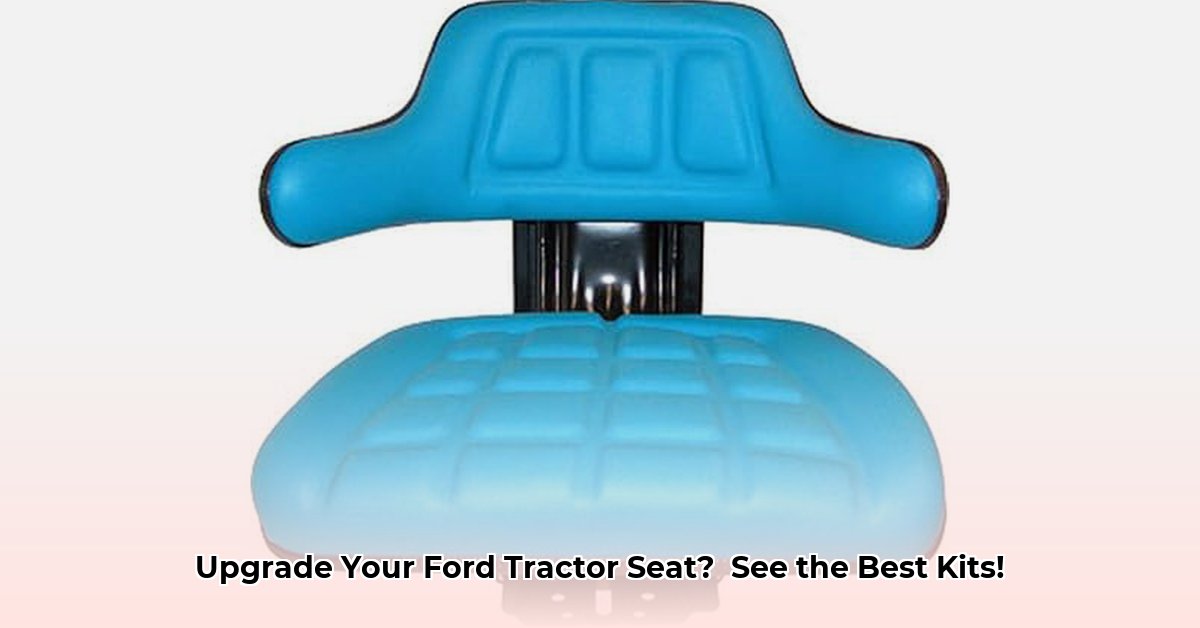
Identifying Your Ford Tractor Seat
A comfortable seat dramatically improves long hours on your Ford tractor. Before purchasing a replacement, accurately identifying your existing seat is crucial. The wrong seat won't fit, wasting time and money. This process is critical before comparing Ford and New Holland replacement kits. For other brands, you might find helpful information on sites like John Deere Seat Info.
Consult the Owner's Manual: Your owner's manual provides the tractor model and original seat specifications. If unavailable, proceed to step 2.
Decipher the Serial Number: Locate the serial number plate (usually on the tractor's chassis). This number helps identify the exact tractor model, aiding in proper seat selection.
Examine Seat Markings: Seats often display model numbers or markings. Thoroughly inspect the underside, sides, and any other areas for these crucial identifiers. Use a magnifying glass if necessary. Photograph all markings clearly for later reference.
Seek Expert Assistance: If identification remains challenging, contact your local Ford tractor dealer or consult online Ford parts websites for assistance.
Understanding Tractor Seat Components and Types
A tractor seat isn't just a padded surface. It's a sophisticated system designed for comfort and support. Key components include:
- Base: The sturdy foundation attaching the seat to the tractor.
- Suspension System: This crucial element absorbs shocks and vibrations. Two main types are available:
- Mechanical Suspension (Springs): A reliable, cost-effective system using springs for cushioning. While durable, it offers less comfort than air suspension.
- Air Suspension (Air Ride): Provides superior comfort and adjusts to weight and terrain. While more expensive, it offers unmatched comfort.
- Seat Pan: The padded surface you sit on. Materials such as vinyl, cloth, and foam are commonly used. Consider durability and ease of cleaning.
- Adjustments: Many seats offer height, tilt, and lumbar support adjustments for personalized comfort.
Choosing the Right Replacement Kit
Selecting a suitable replacement involves a structured approach:
Budget Allocation: Determine a realistic budget. Premium kits offer advanced features at a higher price.
Comfort Prioritization: Decide on your key comfort priorities. Do you need superior lumbar support, or is air suspension essential? Consider additional features such as heating or armrests.
Supplier Evaluation: Research reputable suppliers like K&M and compare prices and features across various brands and models. Check online retailers (like Amazon), but always verify compatibility with your tractor model before purchasing. A warranty also adds a layer of protection.
Compatibility Verification: Always confirm compatibility with your tractor model before purchasing. Cross-reference the supplier's specifications with your tractor's details to ensure a perfect fit.
Installing Your New Ford Tractor Seat: A Step-by-Step Guide
Installing a new seat can be straightforward with these steps:
Gather Tools and Materials: Assemble your new seat, owner's manuals (for both tractor and seat), appropriate wrenches and sockets, and any additional tools specified in the seat’s installation instructions.
Remove the Old Seat: Carefully remove the old seat, taking photos or detailed notes of the connection points. This aids in reinstallation and troubleshooting.
Install the New Seat: Follow the new seat’s installation instructions precisely. Refer to your photos or notes for guidance.
Test and Adjust: After installation, sit in the new seat and test all adjustment features. Ensure everything functions correctly before resuming work.
Maintaining Your New Tractor Seat for Longevity
Proper maintenance significantly extends your seat's lifespan:
Regular Cleaning: Regularly wipe down the seat with a damp cloth, using mild soap if necessary.
Periodic Inspection: Periodically check for loose bolts, torn seams, or wear and tear. Addressing minor issues prevents larger, more costly problems.
Lubrication (When Applicable): Lubricate moving parts, according to the manufacturer's instructions, to ensure smooth operation.
How to Compare Ford and New Holland Tractor Seat Replacement Kits
Direct comparison between Ford and New Holland kits requires understanding key seat components and prioritizing your needs. Consider factors like your budget, the type of suspension system (air vs. mechanical), materials, adjustability options, and features (heating, lumbar support). Always verify compatibility with your specific tractor model. Reputable suppliers like [insert supplier links here] offer a range of options. Thorough research and comparison-shopping are key to finding the best fit for your needs and budget.